Original definition:“Reverse 911” is a general term that describes a process frequently used to contact citizens and businesses by matching a telephone number with an address, and it is a form of public Safety technology used to communicate with people in a defined geographic area. The term is commonly used as a verb (ex. The town reverse 911 called citizens), an adjective (ex. The town bought a new reverse 911-type system for citizen call outs), or a noun (ex. The town purchased reverse 911 today).
Today’s additional definition: Reverse 911 is a public alert system most frequently used by safety organizations to alert individuals and businesses to the risk of danger by sending a recorded voice message to landline telephones and registered cellphones within a defined geographical area. Hundreds of public safety officials utilize Reverse 911 in all types of situations for communication including public or private entities to large groups (neighborhood watch group) to schools, universities, incident command centers or emergency management agencies. Communication might range from emergency use and critical notifications on hurricanes, floods, disasters or mass casualty events to non-emergency use for community events or local outreach for volunteer assistance.
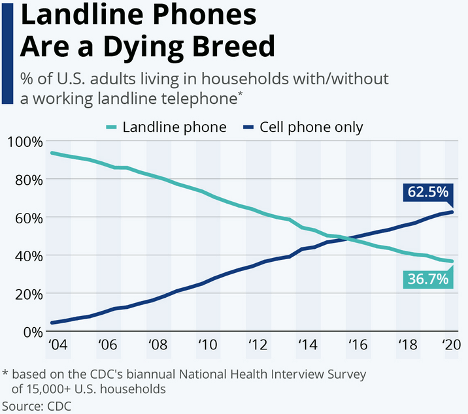
It’s quite simple – many people do not realize that when they dial 911 on a landline phone, their location is displayed to the operator taking the call. This process is known as “reverse lookup” and allows an emergency dispatcher to quickly determine the caller’s location. The operator can also dispatch help to the address and proceed with emergency response even if the call is disconnected or the caller is unable to speak due to a medical emergency or threat. But what happens if a caller uses a smartphone? That’s the problem affecting many people today. As more households choose smartphones over landline phones, fewer people are receiving reverse 911 calls. Instead, they’re opting for alternate contact methods such as email, SMS, and text or push notifications. As smartphones have become a constant companion to young children, teens and adults, landline phones are rapidly losing their relevance. In 2004, more than 90 percent of households had landline phones and today, it’s less than 40 percent. This data is provided by Centers of Disease Control and Prevention, which has been tracking phone ownership in the U.S. as a by-product of the biannual National Health Interview Survey since 2004.
When it comes to life-threatening situations, it is an expectation of the population to be notified immediately via several contact paths. In the 2000’s as smart phones emerged and built market share, showing dominance would continue, Computer Aided Dispatch (CAD) 911 systems developed or integrated software solutions to improve 911 that allowed mass alerting to a geographic area or mapped area (map-based notifications). Such notifications are known as Amber Alerts or similar have a regional name such as “Alert Iowa” and can be state-wide and even city, county or municipality focused. Wide geographic areas and mass populations could quickly be notified of urgent and important information that impacted personal safety or assisted law enforcement. Or, citizens can now text 911 for help if they are not able to speak on the phone for some reason. Municipalities to include cities, towns, and counties have created citizen opt-in portals (via website or internet enabled signup) to help ensure that people sign up and receive these emergency notifications. Some of the large state-wide or national wireless emergency network alerts are opt-in through phone settings. However, it is not a surprise that many citizens (for local and regionalized alerts from 911 dispatch or emergency management) are ill informed about the need to proactively keep the cell phone carrier updated in the database, as text and SMS/MMS technology relies upon carriers receiving the information and then delivering the alerts to the citizen (enabled by cell towers and data plans). New technology through push notifications and cloud-based software as a s solution (SaaS) and mobile applications allows for just a one-time signup that stays with a designated cell phone despite their carrier. In addition, alerts are delivered via mass distribution at a higher guaranteed rate and speed of delivery due to cell phone tower limitations that exist when massive data stacks on towers. Reverse 911 systems should allow for both SMS/MMS/text delivery and push notifications and cross platform deliveries that could include robocalls and emails as well. Plus, there are additional advantages of mobile application based alerts that include citizens only getting alerts if they are in an impacted area or ‘geofenced’ area where a threat or impacted area is known to exist. Mass notifications historically have improved public safety notifications but the 2020’s have seen the evolution of new GPS enabled technology to ensure that citizens only receive on-the-go alerts regarding public safety when they are in an impacted area. Surprisingly, CAD 911 systems are still playing catchup and many 911 dispatch centers and communities or large groups/gatherings/hosts to large events do not know about this technology. The newest technology allows the incident commanders, management, or law enforcement with feet on the ground to actually get more assistance in protecting those impacted by clear and meaningful notifications to assist in evacuation, shelter-in-place or get assistance with things like assistance in finding a missing child at large public events. Notifications and alerts can even allow for those receiving the alert to be able to respond within a designated time period and see all updates in a feed within the app that do not disappear to help improve communication flow and improve outcomes for those impacted.
EMMA can be utilized by public safety entities to provide very relevant alerts to populations. This is not unique, there are other software providers that are in this space, however, EMMA provides very unique ways of integration for Reverse 911 into a Public Safety outreach and alerting plan. The local law enforcement or emergency management office or 911 CAD dispatch may be the decision makers and assisting with the budget for this software to a citizen’s geographic area. A perfect example of use might be a local police incident command task force that is always monitoring and policing large public events in confined geographic areas or ‘geofences’ that have known high risks due to the large population that is in a small geographic area. A Public Safety Reverse 911 EMMA Plan allows for citizens from a community or attendees of these events to sign up via a quick app download and an approved code that is provided. QR Codes published on websites or on postings/brochures/fliers and public safety information notices allow for mobile phone users to quickly scan the QR code, download the app, insert the code and enter user data to uniquely identify the citizen (first name, confirm mobile #). Codes can be set to expire, if desired or the user will continue getting alerts, without expiry whenever or wherever there is an alert sent within that EMMA Plan’s extended boundaries of use, as long as they keep the app on their device. Citizens can even be on many simultaneous plans, receiving appropriate alerts from any relevant administrator (their employer, child’s schools, their university, local city, state, county, convention center, hotel, and so on) in places they live, work eat, sleep or play.
While we recognize the relevance and need for mass notifications such as the Amber Alert, the underlying relevance of alerts that impact us in our everyday lives is the key to the 2020’s and matches the desire of the population of the US today.
Common citizens to anyone who is vested in caring for and ensuring the safety of many people should be educated on EMMA and its patented technology offering. The embedded “Call 911” button allows for citizens using the app to be directly connected to a 911 dial without accidentally calling 911. EMMA directly provides GPS coordinates, can integrate with 911 (plan options exist for 911 integration for large organizations) for instant CAD panel alerts and datasets that do not have cell phone triangulation location data delays. EMMA does enable managers and directors with a dashboard and empowers those in charge of anyone’s safety at any organization. Plus EMMA can improve site security and citizen personal safety in many ways, especially during mass notification events where cell tower delays are troublesome. EMMA alerting comes inclusive with enabled one press panic alert button access or can be customized to include 2-way communication that is cross platform at a very low annual cost and subscription fee.
Communities utilizing EMMA whether it be your home community or a community out of your region any user enrolled in EMMA will receive alerts even when they go to another community. The alerts received are based off of your location you’re within; no more logging into many different applications or worrying about only being allowed up to a limited number of community alerts/regions. Once a user has EMMA on their mobile application, any public safety entity alert sent by Reverse 911 plans will be applicable to the EMMA user, regardless if they are on the registered list of local or guest users or not. EMMA is intended to be a public safety alerting tool that is cross platform and cross geography but that listens for geographic GPS-enabled alerts relevant to that citizen as they travel the US. This makes alerting signup easy for citizens and reduces the cost of engagement and outreach for administrators who are in charge of public safety.
Current software systems work well with 911 and in emergency management. In essence, citizen mass notifications and alerts through map-based Reverse 911 have been around for many years but in today’s world software updates allow improved communication and eliminates maintenance or subscriber problems caused by a simple switch in cell phone carrier by citizens. Geofences or geographic boundaries should interact with citizens getting GPS enabled location-based alerts so that IF a citizen is in an impacted area, they will treat them with urgency. Citizens should not be desensitized to alerts due to from being bombarded by all emergency alerts in a mass area on a continual basis. Plus, allowing citizens to communicate and respond directly to the incident command or management personnel in charge for direct continual communication is key. Urgency of alerts and transparency to information by those in charge, from those impacted, are key to improving outcomes during emergency situations and providing 911 responders efficiency during critical events, especially. Citizen mass notification and alerting systems should consider GPS enabled software like EMMA, with advanced emergency management dashboard capabilities for administrators that integrates with 911, as well. Plus, integrated SaaS and mobile apps like EMMA are very cost friendly, inexpensive, great add-ons to existing complex dispatch or emergency management communication systems that definitely improve public safety. Of note is that updated technology like the patented EMMA SaaS and mobile application will appeal to larger audiences of administrators who are in charge of large groups or people and geographic areas, including 911 but to an extended audience of industries.